
Mid February 2026. Extremely thick snow falling on the plains of Seewinkel Nationalpark, where I go to participate in the annual conference of professional Austrian nature guides. I meet an enthusiastic biology teacher and place-based educator from a kindergarten teacher’s college with whom I share a wide range of interests covering such non-mainstream topics like Viktor Frankl’s logotherapy. We stay in touch and after a few longer emails, I am invited to visit Claudia’s school, where she initiated about a decade ago a shift from secondary to primary learning experiences.
End May 2026. It’s a super warm summer day. The roses have just started to bloom and there is an unbearable fragrance in the air. We are in the botanical garden in Linz, where Claudia, one of her colleagues and me have prepared a digitally augmented outdoor learning format for a large class of students. We experience some technical difficulties, which I could have taken care of with more time and more funding to work on such projects, but the format was designed in the same week, and we had no time to do a quality check before meeting the students.
I leave with a heavy heart and many doubts. Are we still on the right track with this project? How much non profit work is possible and meaningful to induce a shift in our education systems? How much funding is required to provide for everybody involved a good experience? When I let the project sink in, it is interestingly not the implementation with the students that stands out, but an email conversation between Claudia and a municipal government official speaking for the botanical garden.
Upon informing her contact person about the support of Green Steps and our visit, Claudia is told that the Green Steps team is not permitted to enter the garden free of charge like the students and teachers. The municipal official explains her decision with a striking line of thought: Mr. Wimberger developed some kind of software—I assume he wants to make some money from it?
Let’s ponder on this statement for a bit, because it mirrors what has gone wrong in our public perception of what software should be. Somebody develops a software? Well, this person clearly must be a cut-throat capitalist. The idea that software developers are only in the game because they want to make a killing has truly become a basic assumption. Rightly so. American and meanwhile also Chinese software giants have done everything possible to cement the understanding of software building corporations as money making machines.

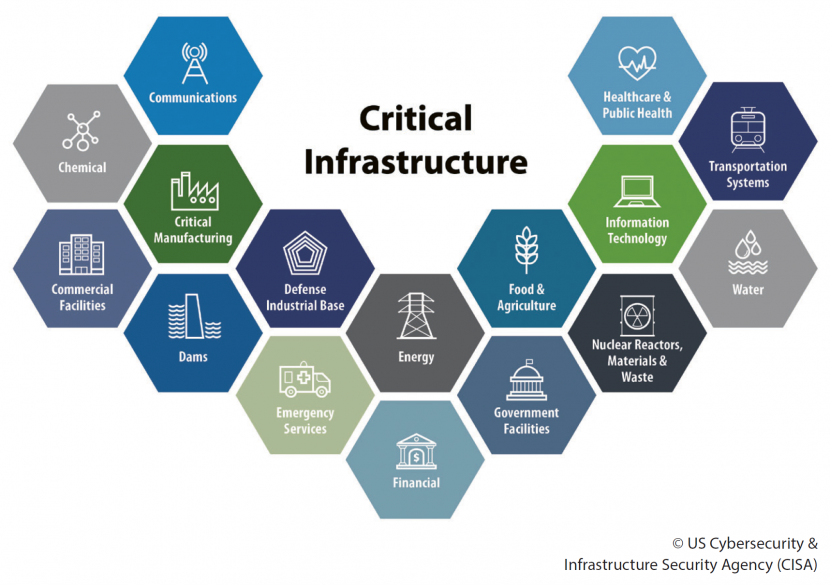
But what if this assumption is fundamentally wrong? What if a good life for all, and I mean all in the sense of triple health – ecological, social and economic – what if a good life for all requires software as a public infrastructure? “Software as public infrastructure” is the idea that some digital systems are now as foundational to society as roads, electricity, water systems, or public transport — and therefore should be treated, funded, governed, and protected accordingly.
I think the idea has become increasingly important for four reasons:
- Society already depends on software structurally
- Markets alone often underprovide trustworthy digital infrastructure
- Open standards and interoperability matter for democracy and resilience
- AI is amplifying the stakes dramatically
Examples of software that increasingly behaves like infrastructure:
- identity systems
- payment rails
- educational platforms
- health record systems
- public communication layers
- mapping and geospatial systems
- digital signatures
- civic participation platforms
- open knowledge repositories
- AI models and datasets
Projects like Wikipedia, Linux, Mastodon, Signal, or Estonia’s digital-government stack are often discussed in this context because they provide broad public utility rather than just private shareholder value.
The strongest argument in favor is: If essential social coordination depends on software, then leaving all foundational digital systems entirely to short-term commercial incentives creates systemic fragility.
You can already see this when:
- schools depend on proprietary ecosystems
- municipalities cannot migrate data easily
- scientific work depends on venture-backed APIs
- communities lose access when platforms shut down
- critical open-source projects are maintained by exhausted volunteers – like our own team here at Green Steps ARK
The current AI transition makes this especially relevant. If a handful of companies end up controlling:
- cognition infrastructure
- educational copilots
- government workflows
- scientific discovery tools
- public discourse filtering
…then software stops being “just products” and becomes constitutional-scale infrastructure.

That’s why debates around open-source AI, digital commons, sovereign cloud infrastructure, and public digital platforms are accelerating right now and why the Green Steps ARK as an education platform sits within this broader philosophy: software as an enabling layer for collective capability rather than only a monetized consumer service.
What can be more important than shaping our cultures independently from mammon and leviathan? And what shapes culture more than how we run our schools? The question which technologies we use in an educational settings should be central, but it is rarely asked. Mostly because educators are occupied with content and students. They have rarely time to ask the big questions of organizational development, and if they do, they only pick between available solutions like google classroom or ms teams.
My most painful realization these days: software as a public infrastructure requires a minimum funding from the public which is neither available nor accessible. Ideas? Share them with us in our general chat: https://forum.ark.greensteps.me/chat/c/general/2
