
Why we decided to use Discourse?
The ARK is built around open source and digital commons principles. We have explored different communication mechanisms which conform with our principles and decided to use Discourse, because we don’t want to reinvent the wheel and build an new learning ecosystem with the best tools already available.
Discourse is like the ARK an open source, nonprofit digital commons. It allows decentralized data ownership and suits our approach of building bioregional knowledge bases best. To arrive at this conclusion, we did not only try many communication tools ourselves, we also ran many comparisons. Some are offered on the Discourse site: https://www.discourse.org/downloads others we saved in AI chats for you:
Discourse vs Slack: https://chatgpt.com/c/69653158-6214-832d-b90d-3b554de90eb6
Discourse vs Zulip: https://chatgpt.com/c/6a3fca12-7748-83eb-b052-082cfaf43f71
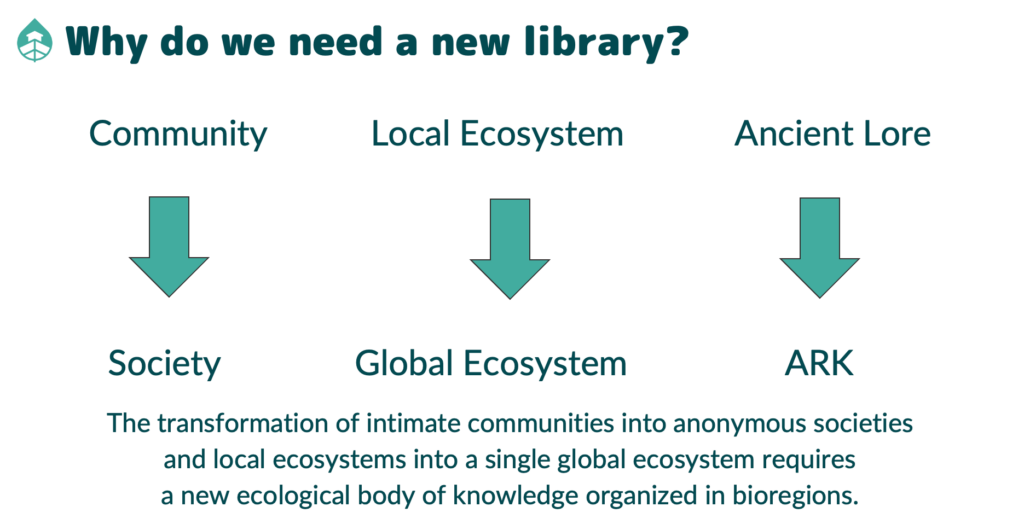
Why do we need a new tool to discuss what matters?
Today’s digital communication infrastructure is increasingly controlled by a small number of commercial platforms such as WhatsApp, X (Twitter), WeChat, Telegram, and Slack. While these tools enable fast connection, they concentrate enormous power, data, and profit in the hands of a few corporations and state capitalist entities. User interactions, social relationships, and collective knowledge become resources to be extracted, monetized, and controlled through proprietary algorithms, surveillance-based business models, and closed ecosystems.
This concentration of digital power contributes to the wider pattern of exploitation affecting both people and planet: human attention becomes a commodity, communities become dependent on private platforms, and digital infrastructure grows through resource-intensive data centers and hardware supply chains. Instead of strengthening local communities and collective intelligence, many existing tools reinforce fragmentation, competition, and dependency.
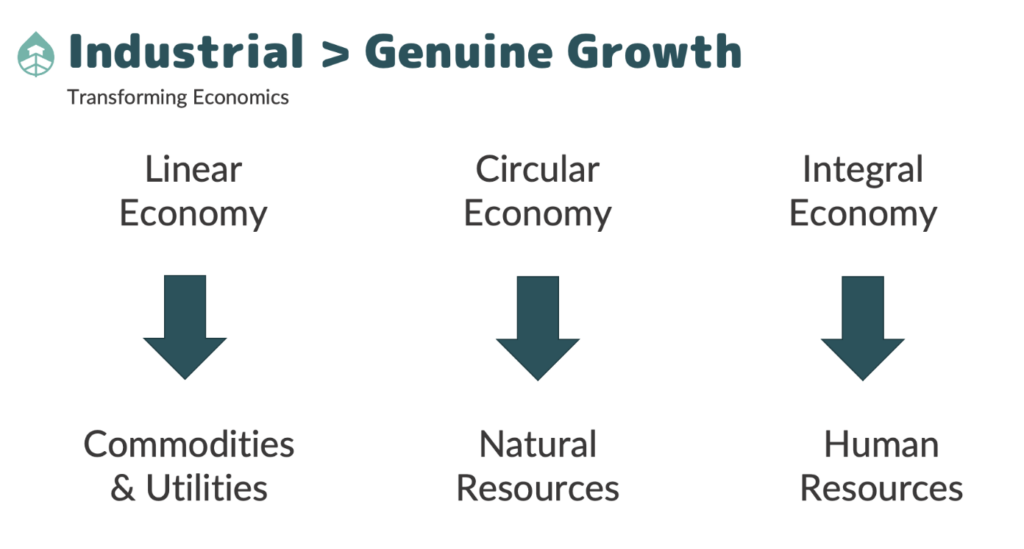
The challenge is particularly visible in education. Schools increasingly rely on classroom-focused technology such as Microsoft Teams and Google Classroom. While these systems can support administration and content sharing, they often reproduce the limitations of traditional classroom structures: learning remains centered around institutions, teachers, and closed digital environments rather than extending into communities, ecosystems, and real-world experiences. Students become users of platforms rather than active participants in creating knowledge and caring for their places.
The transition towards a regenerative digital future requires a different approach: decentralized, open-source, and community-owned communication infrastructures that support cooperation, knowledge sharing, and local empowerment. Digital tools should serve people and ecosystems rather than extract value from them.
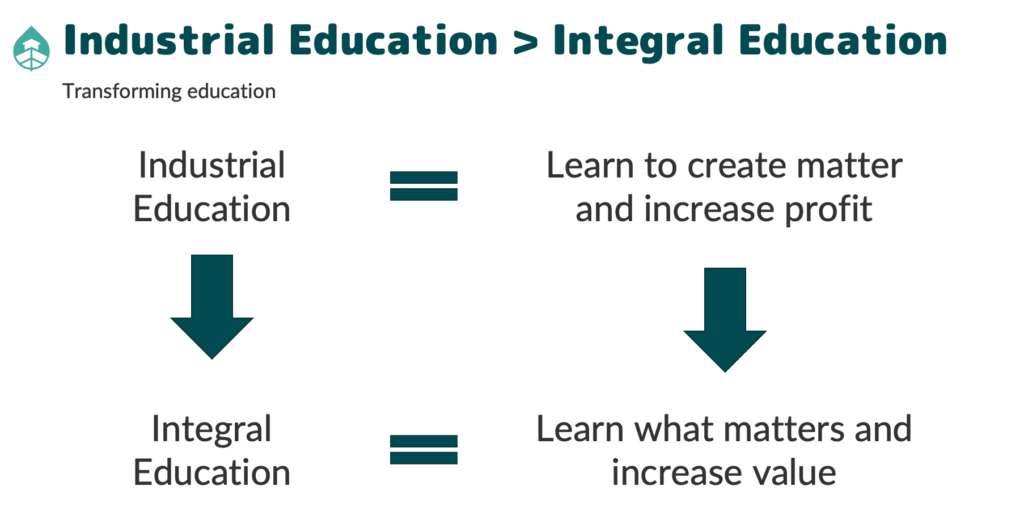
The Green Steps ARK follows this vision by combining open technology with place-based learning and ecological stewardship. Instead of creating another isolated platform, it aims to build a digital commons where people can connect, discuss what matters, learn from each other, and collaborate in caring for their communities and ecosystems.
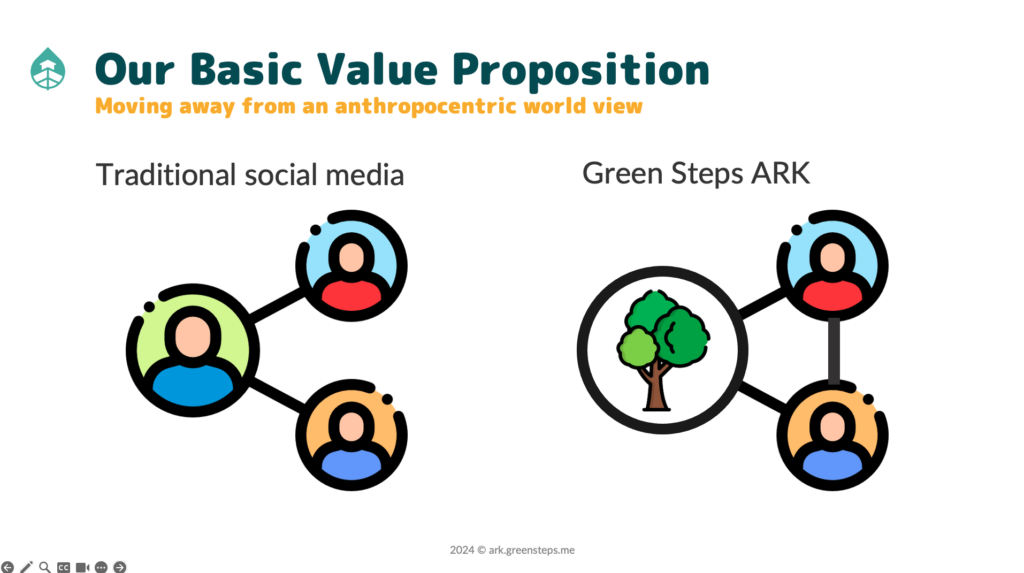
The following manual video explains that the choice of your digital communication is similar to your choice of diet an important contribution each one of us can make on the path towards a more regenerative and life affirming culture.
The analogy between diet and digital communication is striking. It turns our individual behavior into the most powerful agent of transformation and simultaneously renders a choice made by only a few into a rather futile undertaking – considering current demographics at this point of climate change and social distress.
A highly fragmented world of communication technology is useless and it must be in our all interest to build a solution at the most effective pivot of transformation synergies. In our systems architecture this is education.